

Kochian Named to Agricultural Research Service Science Hall of Fame
In recognition of his significant contribution to the understanding of crop mineral nutrition, Leon V. Kochian was honored today at the ARS National Agricultural Library.
In recognition of his significant contribution to the understanding of crop mineral nutrition, Leon V. Kochian was honored today at the ARS National Agricultural Library.

Hartz serves on the BTI Board of Directors where he advises and oversees the financial and administrative aspects of BTI. He also acts informally as an Ithaca representative, maintaining the strong connection between BTI and the local community.

“There is such a disconnect between what the average person knows about plant science and what we do in the lab here…I think it’s really important to be able to talk to anyone about what I do in a way that they understand.”

The Fall Monday Morning Seminar series began Monday, August 31 at 9:30 AM. Featuring two talks from Armando Bravo from the Harrison Lab and BTI Science Writer, Patricia Waldron.

BTI’s Postgraduate Society explored intellectual property law with attorney—and former biochemist and cell biologist —Elysa Goldberg, at a recent professional development session.

Harrison Lab has discovered that plants use EXO70I to form a membrane around the fungus in arbuscular mycorrhizal (AM) symbioses, beneficial associations where plants receive phosphate from fungi in exchange for carbohydrates.

Pamela Ronald, a rice geneticist at the University of California, Davis, and a member of the Boyce Thompson Institute Scientific Advisory Board, “I support genetic tools and farming practices that enhance sustainable agriculture.”

Gomes Selman set out to create a computer program to improve the efficiency of a genome editing technique called CRISPR/Cas9.. “I’ve grown to really enjoy coding and algorithm design.”

BTI Researchers pinpointed which genes are important at different stages of tomato fruit development by monitoring how gene expression changed in the first four days after a flower becomes pollinated.

BTI will be part of Tompkins County’s first ever 24 hour local online giving day. All funds received by BTI on this day will go to support the high school summer intern program at BTI.

“My experience was really valuable…It confirmed the fact that I want to do science…science doesn’t work a lot of the time…it’s having the motivation and determination to tackle problems that you’re always going to come across.” Juan G

To promote innovative research and collaboration, the Boyce Thompson Institute for Plant Research and the American Society of Plant Biologists are pleased to announce the formation of the Plant Science Research Network.

Fourteen teachers arrived at BTI from schools as close as Ithaca and as far as Anaheim, Calif. to attend the BTI Plant Biology Curriculum Development Projects (CDP) Teacher Institute July 13-17, 2015

On display are a selection of the hundreds of botanical mandalas Daniel McPheeters has created. “I have always been fascinated by patterns and symmetries, particularly the mandala…I love the natural forms of flowers and foliage.”

Science teachers planted switchgrass seeds, sampled algae-glycerin soap, and participated in roleplaying activities at the Bioenergy and Bioproducts Education Program’s National STEM conference last week in Horseheads, N.Y.

When plants detect pheromones given off by nematode worms, they activate their immune system for protection. The chemical warning not only triggers defenses against nematodes, but also against bacterial, fungal and viral infection.

In her new position, Dilworth aims to increase the representation and advancement of women at all levels in the university and to create a work environment free of gender-based biases.

Summer intern Tawni Middleton grew up on a hay farm in Colorado and plans to make her way back to the fields, by way of a career in plant biotechnology.

BTI officially unveils new state-of-the art facility for bioinformatics project.

Becky Sims will coordinate the teacher training institutes, develop and ship plant science experiment kits to classrooms nationwide and provide support for the Tompkins Cortland Community College biology courses taught at BTI.

Professor Emeritus Alan Renwick attended the groundbreaking ceremony and spoke with the developer about the original BTI building’s history in Yonkers.

Professor James Giovannoni, “There’s a great deal of diversity that’s still available from these varieties that potentially have a lot of useful traits, including tolerance to stresses and important fruit traits.”
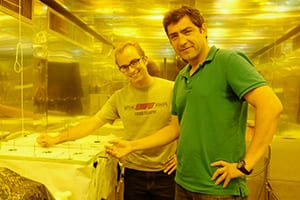
Summer internships at BTI let students try on the life of a scientist for a few months, while attending a variety of talks, trainings and social events. But what’s in it for the mentors, who painstakingly train them?
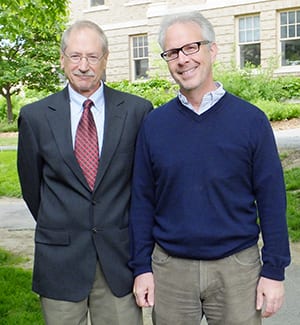
“The more we understand the molecular mechanisms involved in the infection process and in plant resistance, the more effective we’re going to be in breeding resistant crops,” said Professor Greg Martin.

A diverse group of researchers has teamed up to develop a therapeutic treatment for citrus greening disease, a bacterial infection that threatens the future of the U.S. citrus industry.

BTI welcomed three new Board members in May 2015; John W. Townsend, Alan Collmer, and Susan Brown.

Some interns, like Cornell University first-year student Felix Fernandez-Penny, enjoy their time at BTI so much that they keep showing up at the laboratory, long after the summer ends.

BTI welcomes 20 college-level interns for 10 weeks of research in Plant Genome Research Program, the Bioinformatics Program or the Bioenergy Education Program.

Researchers discover the genetics behind high-yield cucumbers that bear all-female flowers by screening 115 genome sequences to find large chromosomal variations.

EPA has granted temporary approval of two genes from spinach to be used in citrus plants. “There is a critical need to go beyond citrus to find novel resistance genes that provide protection…”
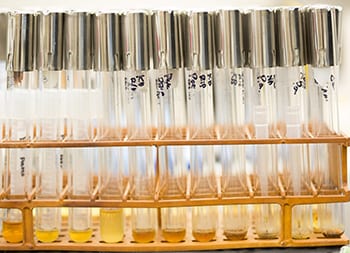
New research from the laboratory of BTI Professor Daniel Klessig finds that salicylic acid, or SA, plays a role in resistance to tomato bushy stunt virus or TBSV by blocking viral replication.

BTI Professor Emeritus Robert Kohut initiates competition at BTI to give early-career scientists an opportunity to communicate with the general public and practice their “elevator speech.”

A new compound could make rice more weed-resistant. Researchers in the Jander laboratory first discovered b-tyrosine while looking for new defense compounds in rice.

Marshall Tyler nominated Maria Harrison for the 2015 Cornell University College of Agriculture and Life Sciences Faculty Excellence in Undergraduate Research Mentoring Award.

BTI Professor Lukas Mueller will participate in an international collaboration to expedite crop breeding for five worldwide staple crops—wheat, rice, maize, sorghum and chickpea.

Postgraduate Society members at BTI host EYH (Expanding your Horizon) workshop to help girls understand genetics and feel more comfortable in the world of science.

BTI President and CEO David Stern visited Arizona April 14-16 to attend the Boyce Thompson Arboretum board meeting and to speak about algae-derived bioproducts and his own algal biofuel research, at Chandler-Gilbert Community College.

The discovery of the role of this ammonium transporter improves the understanding of how the plant and fungal partners regulate the symbiosis and how phosphate and nitrogen move through the system.

Professor Maria Harrison is the 2015 winner of the Dennis R. Hoagland Award from the American Society of Plant Biologists, given every three years, for her outstanding work on plant mineral nutrition.

Research Associate Amber Hotto and colleagues, working in the laboratory of BTI President David Stern, have characterized the first RNase III enzymes that function within chloroplasts.

Klaus Apel’s work is a step in understanding how plants respond to stress…singlet oxygen doesn’t deserve its bad reputation for wrecking cells and killing the plant.
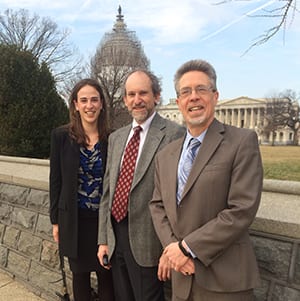
BTI President David Stern traveled to Washington D.C. last week to advocate for increased federal support for plant research for the 2016 fiscal year; Unleashing a Decade of Innovation in Plant Science.

ART@BTI features Nancy Ridenour’s photography. Public invited to reception on Thursday, April 23, 5-7 PM

James Eaglesham began his career as an intern at BTI, and heads to the University of Cambridge, England as a Churchill scholar for pathology research. When back in US, Eaglesham will pursue his doctorate in virology at Harvard, in Cambridge, MA.

Liz Brauer, a graduate researcher in the laboratory of Assistant Professor Sorina Popescu and a student in the plant pathology and plant-microbe biology section at Cornell University, received the 2015 Barbara McClintock Award.

You are confident you can discuss and defend your research with your graduate committee or any PhD scientist on campus. However, can you explain your research to a non-scientist? Prizes offered in BTI’s first speaking contest!

Two attendees of BTI’s summer teacher workshops travelled to the Emerging Researchers National Conference in STEM to present an algal photobioreactor laboratory, designed in BTI labs, for community college and middle school science students.

Boyce Thompson Institute for Plant Research welcomed guests, staff, alumni, and colleagues to celebrate the 90th Anniversary on November 13 and 14, 2015.

Karl Maramorosch, a former BTI scientist, pioneer in insect cell culture and winner of the Wolf Prize in Agriculture, became a centenarian this past month.

Patricia Pinheiro was drawn to the study of insects like a moth to flame. As a grad student in the Cornell Entomology Department and Assistant Professor Michelle Cilia’s lab, Pinheiro studies insects that feed on plants and transmit pathogens.