
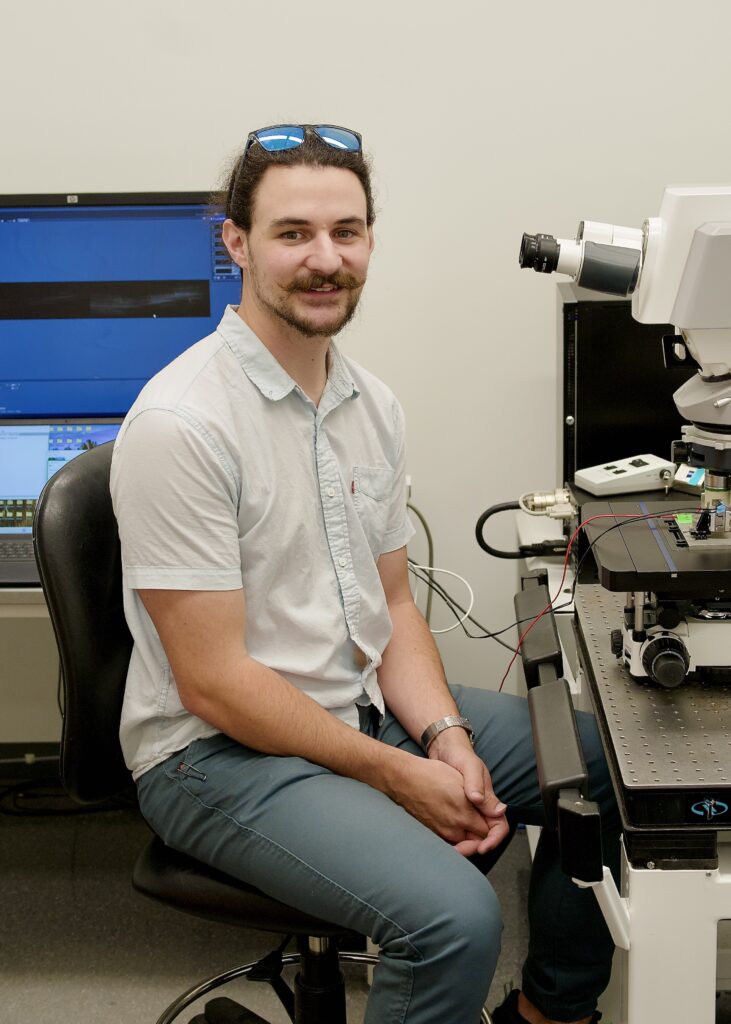
 When Paul Kuehnert talks about his path to plant science, it’s clear that curiosity has been the driving force.
“I am a non-traditional student who has recently returned to school and have completed an associate’s degree in Horticulture from Finger Lakes Community College and will be continuing a bachelor’s in biology from SUNY Geneseo,” he says.
Paul didn’t begin his career in the lab. For years, he worked as a woodworker and furniture designer, crafting pieces that drew inspiration from the natural world.
“Working with wood as a material led me to looking to trees for design inspiration, ultimately leading me to question plant development and functioning,” he explains. “I decided after some time that my interest was so strong that I felt the only way to know more was to pursue it academically.”
That decision changed the trajectory of his life. While earning his associate’s degree, Paul found himself digging deeper into plant science.
“I really had a passion for learning about plants and was delving into existing knowledge to the point I was questioning what is yet to be known,” he says.
Now, he’s exploring different areas of plant research, with a growing interest in plant breeding and a long-term goal: “This program has helped me realize that I’d like to continue in research related to plant breeding and pursue a doctorate.”
Participating in the BTI REU program has been transformative for Paul.
“My confidence has significantly grown throughout the course of the summer,” he says. “Though there were multiple fluctuations in this trend, I’m coming out of this with the knowledge that I was able to succeed in the program as well as realizing that I am more than capable at pursuing any level of graduate degree.”
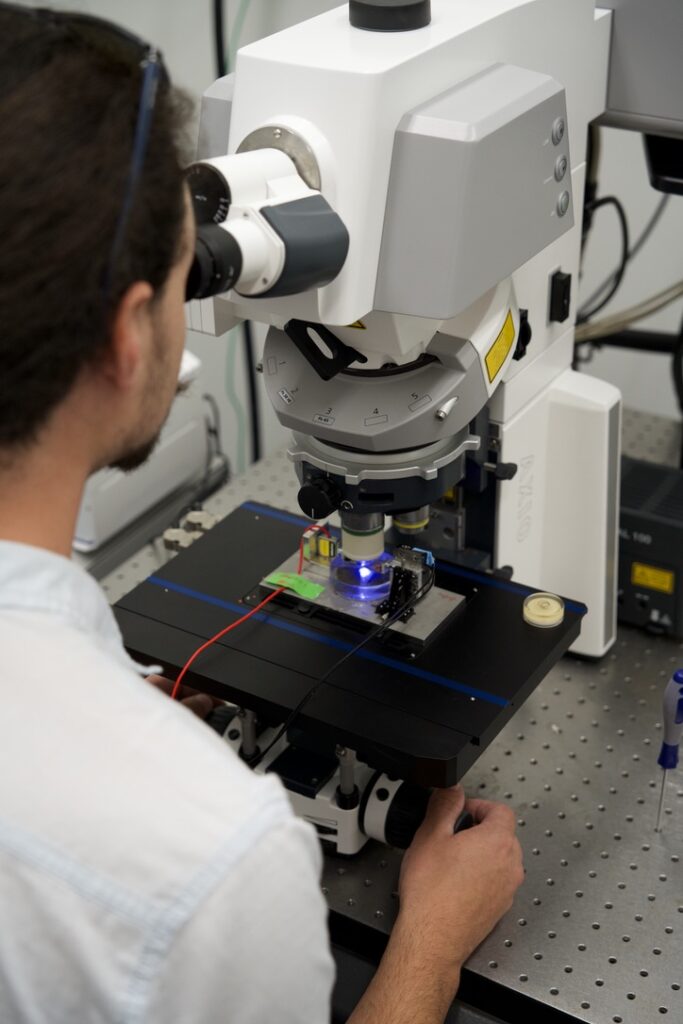
Prior to the summer, graduate school was an uncertain possibility.
“Before the REU program, I was on the fence about whether I might continue with a graduate program after completing a bachelor’s degree,” Paul recalls. “Working alongside other graduate students and post-doctoral researchers has given me valuable insight into the expectations at that level of study. I now see this not merely as a distant dream, but as an achievable goal—one for which I can identify and follow a clear path.”
The summer wasn’t without its challenges.
“The hardest part about the REU program was the relatively short time frame,” he admits. “Now, at the end of the summer, I feel that I have only just got comfortable with the experimentation processes in my lab and how they might adapt to suit my questions. Therefore, I’m extremely proud that I have built upon my knowledge toolkit while also putting together a presentable level of data with analysis by the end of the summer. I only wish I could continue longer for the chance to answer the additional questions that my research presents.”
From the workshop to the research lab, Paul’s journey reflects a deep commitment to following his curiosity, one that began with shaping wood and has now turned toward shaping knowledge in plant science.
When Paul Kuehnert talks about his path to plant science, it’s clear that curiosity has been the driving force.
“I am a non-traditional student who has recently returned to school and have completed an associate’s degree in Horticulture from Finger Lakes Community College and will be continuing a bachelor’s in biology from SUNY Geneseo,” he says.
Paul didn’t begin his career in the lab. For years, he worked as a woodworker and furniture designer, crafting pieces that drew inspiration from the natural world.
“Working with wood as a material led me to looking to trees for design inspiration, ultimately leading me to question plant development and functioning,” he explains. “I decided after some time that my interest was so strong that I felt the only way to know more was to pursue it academically.”
That decision changed the trajectory of his life. While earning his associate’s degree, Paul found himself digging deeper into plant science.
“I really had a passion for learning about plants and was delving into existing knowledge to the point I was questioning what is yet to be known,” he says.
Now, he’s exploring different areas of plant research, with a growing interest in plant breeding and a long-term goal: “This program has helped me realize that I’d like to continue in research related to plant breeding and pursue a doctorate.”
Participating in the BTI REU program has been transformative for Paul.
“My confidence has significantly grown throughout the course of the summer,” he says. “Though there were multiple fluctuations in this trend, I’m coming out of this with the knowledge that I was able to succeed in the program as well as realizing that I am more than capable at pursuing any level of graduate degree.”
Prior to the summer, graduate school was an uncertain possibility.
“Before the REU program, I was on the fence about whether I might continue with a graduate program after completing a bachelor’s degree,” Paul recalls. “Working alongside other graduate students and post-doctoral researchers has given me valuable insight into the expectations at that level of study. I now see this not merely as a distant dream, but as an achievable goal—one for which I can identify and follow a clear path.”
The summer wasn’t without its challenges.
“The hardest part about the REU program was the relatively short time frame,” he admits. “Now, at the end of the summer, I feel that I have only just got comfortable with the experimentation processes in my lab and how they might adapt to suit my questions. Therefore, I’m extremely proud that I have built upon my knowledge toolkit while also putting together a presentable level of data with analysis by the end of the summer. I only wish I could continue longer for the chance to answer the additional questions that my research presents.”
From the workshop to the research lab, Paul’s journey reflects a deep commitment to following his curiosity, one that began with shaping wood and has now turned toward shaping knowledge in plant science.