Unlike humans, plants cannot make simple lifestyle adjustments to adapt to changing environments. When exposed to conditions like extreme heat or water scarcity, instead of putting on sweaters or turning on air conditioners, plants need to sense and respond to these environmental changes at the molecular level. Entering a sort of “survival mode,” plants shift their physiological and metabolic priorities, sacrificing things like growth and reproduction for survival.
The fate of a stressed plant—whether it thrives despite the stress, merely copes with it, or succumbs—is heavily influenced by its genetic makeup and the coordinated expression of key stress response regulators that mediate that shift into survival mode. In work newly published in The Plant Cell, researchers from the Boyce Thompson Institute (BTI) integrated visible stress responses with changes in gene expression, metabolism, and physiology to identify a conserved mechanism of stress signaling in plants.
Funded in large part by the NSF Plant Genome Research Program, the Department of Energy, and the Triad Foundation, this work was a highly collaborative effort. It synergized the comparative transcriptomics expertise of BTI Associate Professor Dr. Andrew Nelson with the rigorous field phenotyping design coordinated by Dr. Duke Pauli at the University of Arizona and the RNA modification expertise of Dr. Brian Gregory at the University of Pennsylvania. As Dr. Nelson explained, “We used a ‘field first’ approach, where we observed how plants cope with real-world conditions, and then shifted to the lab to gain mechanistic insights into those responses.”
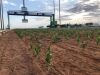
The work began in Arizona, where the team grew six different kinds of Sorghum bicolor, a cereal crop that is known for its tolerance of heat and water scarcity. “We grew sorghum adapted to different environments, so there’s variation in the level of stress tolerance,” says Dr. Nelson. “We took advantage of that variation, heavily monitoring the plant’s responses to the extreme heat and drought common to the deserts of Arizona, to uncover mechanisms governing how they respond to those conditions.”
The group went beyond simple physical observations of plant stress, as detailed by Dr. Li’ang Yu, postdoctoral researcher in the Nelson lab and first author on the study. “We know all of these aspects—the transcriptome, metabolome, and physiology—are closely related to plant performance under stress. By integrating all of this information, we’re able to find trait-associated genes of interest supported by multiple lines of evidence that we can then explore more in-depth.”
This integrative approach highlighted two particular genes that were strongly associated with physiological and physical responses to stress. Discussed in a previous publication in Plant, Cell & Environment, a transcription factor was found to coordinate the drought-responsive changes in stress- and photosynthesis-associated genes. The current work, however, explored a protein that impacts gene expression in a different way: through RNA modifications.
“RNA modifications are like an ‘invisible hand’ that can regulate things like the stability or translation of RNA transcripts, impacting gene expression and biological processes as a result,” explained Dr. Yu. The protein identified in this analysis, DIHYDROURIDINE SYNTHASE 2 (DUS2), is responsible for depositing the modification dihydrouridine (DHU) onto RNA transcripts. In this study, transcriptomic and physiological analyses strongly implicated DUS2 in stress-responsive regulation of photosynthesis.
To explore the mechanism by which DUS2 impacts plant stress responses, the group turned to the model plant Arabidopsis thaliana. At the molecular level, loss of DUS2 resulted in a reduction of DHU modification in RNA transcripts globally and, notably, an increase in the stability of transcripts that are normally DHU-modified, particularly those of photosynthesis-associated genes. As Dr. Nelson explained, “Under normal conditions, photosynthesis- and metabolism-associated transcripts are highly abundant, but their expression levels need to be adjusted quickly when stress is encountered. Simply turning off transcription isn’t enough; the cells have to clear out the existing transcripts. In our model, DHU modifications act as a signal that tells the cell to degrade the modified transcript.” Photosynthesis is a key process that impacts agricultural traits like yield and reproduction, and this novel understanding of how it is regulated during stress opens up new paths to developing crops that are more tolerant to harsh conditions. By modulating the stress-responsive DHU modification, we could change the fate of stressed plants, helping them thrive in the face of extreme conditions.
Written by Alyssa Kearly


