Since its founding more than a century ago, the Boyce Thompson Institute (BTI) has been a place where bold scientific ideas take root.
From advancing plant science and training future researchers, to fostering entrepreneurship and innovation, BTI has long served as a launchpad for scientific discovery. That legacy continues today with innovation extending far beyond the walls of the Institute — and across the globe.
One of the latest examples is PrecizionIQ, an India-based health technology startup co-founded by BTI alumnus Pedro Rodrigues, a former postdoctoral researcher in the lab of Frank Schroeder at BTI. The company is developing novel, non-invasive diagnostics for fetal chromosomal abnormalities, with a mission to make early prenatal testing more accurate, affordable and accessible.
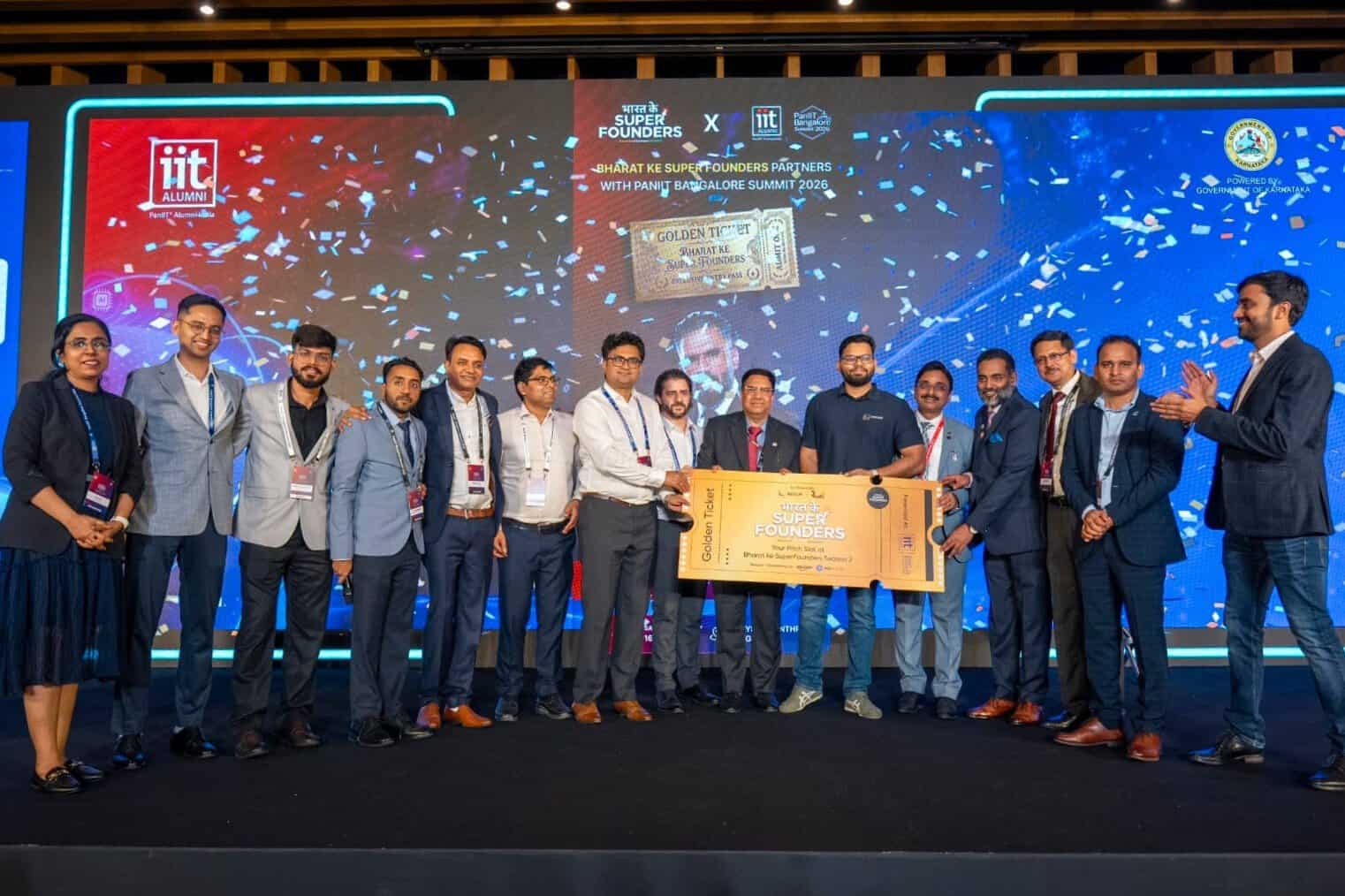
The startup recently received major recognition after being named the top startup at the PanIIT Bangalore Summit 2026, earning the event’s coveted “Golden Ticket” to appear on Bharat Ke Super Founders, an Amazon series highlighting India’s leading deep-tech startups.
For Rodrigues, the moment represented more than a startup milestone — it reflected years of scientific training, mentorship, and collaboration that began during his time at BTI.
“At PrecizionIQ we’re building the world’s first at-home pregnancy risk test,” said Rodrigues. “Every line of code, every lab iteration, every late call comes back to that single image: someone, somewhere, getting answers earlier.”
The technology behind PrecizionIQ was independently developed in part from the scientific knowledge and research experience Rodrigues gained while working in Schroeder’s lab at BTI. While the company and technology are separate from BTI, the Institute’s culture of curiosity-driven science and mentorship played a formative role in shaping the team behind it.
The company is also advised by former BTI employee Murli Manohar and former BTI faculty member and emeritus faculty member Daniel Klessig, highlighting the enduring connections between current and former members of the BTI community.
“BTI has always been a place where innovative thinking is encouraged,” said Manohar, who has served as advisor for the past two years while helping build the company’s scientific and operational foundation. “This company reflects the kind of interdisciplinary problem-solving and entrepreneurial spirit that institutions like BTI help nurture.”
“At BTI as president (2000-2004), professor and emeritus professor I had the great privilege of hiring and mentoring excellent scientists, including Murli Manohar,” said Klessig. “Murli joined my research group as a postdoctoral fellow in 2014. Together we co-found with Frank Schroeder Ascribe Bioscience in 2017, where Murli served as CTO and I as senior advisor and angel investor. The partnership continues with the creation of PrecizionIQ.”
Founded by scientists and entrepreneurs, PrecizionIQ combines expertise in metabolomics, biomarker discovery, analytical chemistry, and data science to address challenges in prenatal care.
Its technology uses high-resolution mass spectrometry and AI-enhanced biomarker discovery to identify chromosomal abnormalities through subtle changes in maternal metabolism. According to the company, the platform aims to detect conditions such as Down, Edwards, Patau, Turner, and Klinefelter syndromes as early as six weeks into pregnancy using a simple blood or urine sample.
The company’s broader mission is rooted in accessibility. Current prenatal diagnostic methods can be imprecise, invasive, expensive, or unavailable in many regions, particularly in low-resource settings. PrecizionIQ aims to provide earlier, non-invasive testing that can scale across both urban and rural healthcare systems.
The company’s work is driven by a deeply personal sense of purpose.
“Families often face anxiety from unclear results,” the company states on its website. “We believe science should bring clarity and peace of mind.”
That blend of scientific rigor and real-world impact reflects a tradition that has long defined BTI itself.
From its earliest days under founder William Boyce Thompson to the Institute’s modern-day researchers, students, postdoctoral scholars, and alumni, BTI has continuously fostered environments where ambitious ideas can flourish. Whether through groundbreaking discoveries, training the next generation of scientists, or supporting entrepreneurial ventures, the Institute’s influence often extends far beyond academic publications.
Now, through companies like PrecizionIQ, that influence is helping shape the future of global health innovation as well.
PrecizionIQ expects to launch its first product in 2027.


