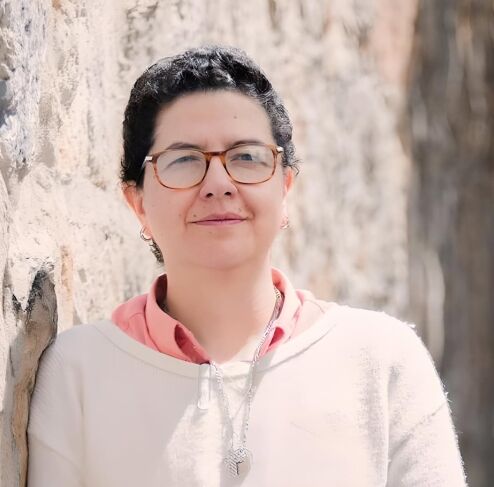
Silvia Restrepo

Professor, President of BTI

Examining the devastating impact of plant diseases on food security, particularly for low-income growers worldwide, by investigating how pathogens evolve and spread.

Intro
Research Focus

How do plant pathogens evolve and spread, and what role does the microbiome play in defense?

Email: sr96@cornell.edu
Alt: srestrepo@btiscience.org

Office/Lab: Room 213

Adjunct Professor
Section of Plant Pathology & Plant-Microbe Biology
School of Integrative Plant Science
Cornell University

Palacios, N. G., González Tobon, J., Buitrago, M. C., Bautista, D., Gonzalez-Garcia, L. N., Toquica, M. C., ... & Restrepo, S. (2025). Microscopical and molecular characterization of the infection cycle of Phytophthora betacei during disease development on tree tomato (Solanum betaceum). bioRxiv, 2025-09.

Regnier, M., González-Tobón, J., Cárdenas, M. E., Mayton, H., Danies, G., & Restrepo, S. (2025). Mefenoxam sensitive isolates of Phytophthora infestans can quickly acquire and lose resistance to this fungicide. Plant Disease, (ja).

Trujillo-Ortigoza, K. S., Marbello-Santrich, A., Rada, F., Guevara-Suarez, M., & Restrepo, S. (2025). Fungal endophytes of cactus (Stenocereus spp.) as a potential alternative to alleviate drought stress in juveniles of Theobroma cacao L. ICS95. mSphere 0:e00865-25.

Patarroyo, C., Lucca, F., Dupas, S., & Restrepo, S. (2024). Reconstructing the Global Migration History of Phytophthora infestans Toward Colombia. Phytopathology®, 114(9), 2151-2161.

Gonzalez-Tobon, J., Childers, R. R., Rodriguez, A., Fry, W., Myers, K. L., Thompson, J. R., ... & Danies, G. (2022). Searching for the mechanism that mediates mefenoxam-acquired resistance in Phytophthora infestans and how it is regulated. Phytopathology®, 112(5), 1118-1133.

Olave-Achury, A., Cardenas, D., Restrepo, S., Lucca, F., Fry, W. E., Myers, K. L., ... & Soto-Suarez, M. (2022). Phenotypic and genotypic characterization of Phytophthora infestans isolates associated with tomato and potato crops in Colombia. Phytopathology®, 112(8), 1783-1794.

Ayala-Usma, D. A., Cárdenas, M., Guyot, R., Mares, M. C. D., Bernal, A., Muñoz, A. R., & Restrepo, S. (2021). A whole genome duplication drives the genome evolution of Phytophthora betacei, a closely related species to Phytophthora infestans. BMC genomics, 22(1), 795.

Bautista, D., Guayazan-Palacios, N., Buitrago, M. C., Cardenas, M., Botero, D., Duitama, J., ... & Restrepo, S. (2021). Comprehensive time-series analysis of the gene expression profile in a susceptible cultivar of tree tomato (Solanum betaceum) during the infection of Phytophthora betacei. Frontiers in Plant Science, 12, 730251.

Chaves, S. C., Guayazán, N., Mideros, M. F., Parra, M., Lucca, F., & Restrepo, S. (2020). Two clonal species of Phytophthora associated to Solanaceous crops coexist in Central and Southern Colombia. Phytopathology, 110(7), 1342-1351.

González-Tobón, J., Childers, R., Olave, C., Regnier, M., Rodríguez-Jaramillo, A., Fry, W., ... & Danies, G. (2020). Is the phenomenon of mefenoxam-acquired resistance in Phytophthora infestans universal?. Plant disease, 104(1), 211-221.

Mideros, M. F., Mayton, H., Danies, G., Lagos, L. E., Fry, W. E., & Restrepo, S. (2020). Differential susceptibility of tree tomato (Solanum betaceum) cultivars to late blight caused by Phytophthora betacei. Plant Disease, 104(4), 1113-1117.

Rojas-Estevez, P., Urbina-Gómez, D. A., Ayala-Usma, D. A., Guayazan-Palacios, N., Mideros, M. F., Bernal, A. J., ... & Restrepo, S. (2020). Effector repertoire of Phytophthora betacei: in search of possible virulence factors responsible for its host specificity. Frontiers in Genetics, 11, 579.

Snoeijenbos, M., Cárdenas, M., Guevara-Suarez, M., Bernal, A., Jiménez, P., y Restrepo, S. (2019). Phytobiomes, the reason why microbiologists and botanists should work together. Annual Plant Reviews Online; Roberts, JA, Ed.; Willey: Hoboken, NJ, USA.

Research Overview

For the last 20 years, Dr. Restrepo has studied diseases of plants. She started her career studying a fungal infection of beans and a bacterial disease of cassava. Then, after her postdoc at Cornell, she decided to focus on the infamous Late Blight disease, an important constraint to several crops in Colombia. She chose to concentrate her efforts on neglected diseases or crops and with small growers.

Prior to BTI, she worked to make Universidad de los Andes one of South America’s best. She designed policies and practices for reforming systems of research recognition and fostering engaged leadership of all professors so they can better interact with the audiences and communities they work with. She also worked with the Colombian government to build the foundations of a bio-economy in different regions.

Every year, plant diseases wipe out vital food crops. In many regions, the default response has been heavy pesticide use, which harms ecosystems and human health.

Dr. Restrepo’s research provides genomic and ecological insights that inform evidence-based disease management strategies, contributing to the development of alternatives to chemical pesticides that maintain crop productivity and directly benefit vulnerable farming communities. Her work directly addresses the needs of vulnerable farming communities in regions where plant diseases threaten food security.

Image link
Image link
Image link
Image link

Lab Members

In the News