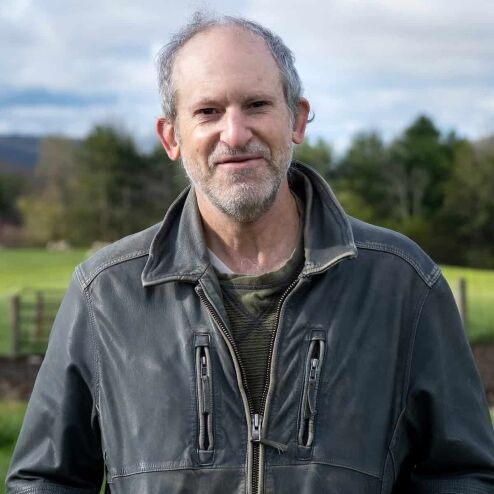
David Stern
Professor
Investigating how to optimize the efficiency of photosynthesis to enhance plant growth and productivity, leading to more sustainable crop production and a reduced carbon footprint.
How is photosynthetic carbon assimilation regulated, and how can assimilation be optimized?
Email: ds28@cornell.edu
Adjunct Professor
Section of Plant Biology
School of Integrative Plant Science
Cornell University
The GT1 domain of RNase J ensures RNA quality control through dsRNA binding in Arabidopsis plastids
K Baudry, S Skiada, C Burstein, V Liveanu, A Liehrmann, M Ceminsky, ...
Nucleic Acids Research 54 (3), gkag033
The α form of Rubisco activase supports photosynthesis during heat stress in the absence of the β form in Setaria viridis
AM Hotto, S Gartner, K Eshenour, DB Stern
Journal of Experimental Botany, eraf289
Revolutionizing academic hiring: a faculty cluster hire emphasizing teamwork
DB Stern
Trends in Plant Science
Transgenic expression of Rubisco accumulation factor2 and Rubisco subunits increases photosynthesis and growth in maize
K Eshenour, A Hotto, EJS Michel, ZG Oh, DB Stern
Journal of Experimental Botany 75 (13), 4024-4037
Rubisco production in maize mesophyll cells through ectopic expression of subunits and chaperones
AM Hotto, C Salesse-Smith, M Lin, FA Busch, I Simpson, DB Stern
Journal of Experimental Botany 72 (13), 4930-4937
Compositions and methods useful for the regulation of abiotic stress responses in higher plants
Research Overview
The Stern laboratory focuses on photosynthetic carbon assimilation and gene expression mechanisms in the chloroplast, where photosynthesis takes place. We use molecular genetic techniques to test hypotheses for increasing plant performance and photosynthetic efficiency by creating and analyzing transgenic plants. Our gene expression work focuses on a key ribonuclease, RNase J, which exerts quality control over the transcript population of the chloroplast, and is itself essential for plant embryo development and viability.


Lab Members

Riley Henderson
Graduate Student

Amber Hotto
Senior Research Associate

Maleah Sena
Research Technician
In the News

Over a century ago, a botanist named Daniel Trembly MacDougal injected salt solutions into plant ovaries and reported that the procedure changed the hereditary material passed on to offspring. Both...

BTI Welcomes 2022 Summer Student Interns
On May 31, Boyce Thompson Institute welcomed 41 of the country’s brightest undergraduate students from universities around the country to experience the life of a researcher for 10 weeks. Ten...

BTI Welcomes 2021 Summer Student Interns
On June 1, Boyce Thompson Institute welcomed 28 of the country’s brightest undergraduate students from universities around the country to experience the life of a researcher for 10 weeks. Seven...

Cluster Hire Yields Three New Faculty Members
Boyce Thompson Institute is pleased to announce the hiring of three faculty members as part of its new and innovative “cluster hire” approach. Out of 113 applicants, the three people...
Internships
BTI offers a summer research experience program for undergraduate and high school students.
Intern Projects in the Stern Lab
The underlying research themes in the Stern laboratory are chloroplast biology, bioenergy, and nuclear-cytoplasmic interactions. Within this framework, we study how chloroplast genes and metabolic activities are regulated by the products of nuclear genes, usually acting at the transcriptional or post-transcriptional level. Areas of emphasis include the roles of ribonucleases and RNA-binding proteins and assembly of the carbon-fixing enzyme Rubisco. We are also using molecular and genetic techniques to adjust chloroplast metabolism for the production of useful hydrocarbons.
Previous Interns


Hannah Rockwell
Engineering Enhanced Photosynthesis in Zea mays
Zea mays (Maize, Zm) and Miscanthus x giganteus (Mg) employ C4 photosynthesis, which enhances carbon assimilation efficiency by concentrating CO2 around Rubisco to minimize photorespiration. Pyruvate, orthophosphate dikinase (PPDK) regenerates phosphoenolpyruvate from pyruvate to feed the carbon concentrating cycle. PPDK is regulated by PPDK regulatory protein (PDRP) through phosphorylation and dephosphorylation. PPDK is a tetramer, and in maize the tetramer dissociates between 10-15°C, leading to decreased photosynthesis under chilling conditions. Conversely, M. x giganteus is chilling tolerant and maintains PPDK abundance and activity. This study investigates the impacts of expressing MgPPDK in maize alongside the endogenous PPDK and alone in PPDK mutants. Homozygous maize PPDK mutants (ΔZm) are seedling-lethal, but plants expressing the MgPPDK transgene without the endogenous ZmPPDK (MgΔZm) are viable, demonstrating successful complementation. Three genotypes were analyzed in this study; wild-type, azygous segregants of transgenic lines ; MgΔZm; and +Mg, where plants contain both ZmPPDK and MgPPDK. Plants were grown under high and low light and genotyped using PCR and immunoblots. Leaf protein samples from several time points were analyzed using immunoblots, screening for phosphorylated (inactive) PPDK, total PPDK content, transgenic PPDK content, and total protein levels. Carbon assimilation was measured using a LI-6800 instrument at several points during the day-night cycle. From this study, we determined the impact that MgPPDK has on protein content and photosynthetic performance in maize. MgΔZm plants had higher transgene expression than +Mg and lower inactive PPDK than the other genotypes. However, they had poor photosynthetic performance in low light. In maize, MgPPDK may have better substrate interactions with endogenous PDRP than ZmPPDK does, but weaker tetramer associations. Gaining a better understanding of these plants will lay the groundwork for future experiments to explore the effects of higher transgene expression and observe these plants under different environmental conditions.
Working with Dr. Stern’s lab under Riley’s mentorship this summer has been an incredible experience, and I am excited to employ my newfound tools and skills in future research efforts. I have been researching photosynthesis with the RIPE project at the University of Illinois for 2 years, but this was my first time playing a role in the real-world applications of formal academia. I am grateful for the independence that I was entrusted with while being supported by a collaborative and encouraging lab group. Many things went wrong over the course of this program, including changing my project entirely several weeks into the summer, but I am grateful for the opportunity to challenge myself and problem-solve. I will miss the community-driven culture of the Stern lab, and I am eager to carry this experience to wherever a career in agricultural engineering leads me.
Intern Info
Alex Duke Cardenas
Standardizing Setaria viridis phenotyping protocols—Application to Rubisco overexpression lines
Earth’s population has grown tremendously over the last seven decades, from 2.6 to 7.6 billion1,2, and finding ways to provide food without increasing land use is essential. Improving crop photosynthesis is a promising pathway to sustainably feed the growing population. Previous studies have shown that overexpression of Rubisco in maize led to higher Rubisco content and increased yield3. In this study, we analyzed the effect of Rubisco overexpression (RAF1-LSSS) in another C4 species, Setaria viridis. S. viridis has many advantages as a model organism: it grows quickly, it is small, and uses C4 photosynthesis, just like foxtail millet, sorghum, maize, and sugarcane4. As S. viridis is a new model organism for the Stern lab, the first aim of this project was to establish a set of standards for measuring its growth and development. The second aim was to assess the effects of overexpressing Rubisco on the phenotype of S. viridis by recording daily and weekly measurements and monitoring the emergence of maturity features. Other measurements, like seed weight and biomass, will be taken later to determine how Rubisco affects yield. In the future, replicating the experiment with other events, using higher throughput phenotyping methods, and repeating in another controlled environment, like a greenhouse, would be useful to further elucidate the effects of overexpressing Rubisco in S. viridis.
My internship at BTI was a gentle introduction to research and the lab. I learned what the ‘mundane tasks’ of a researcher look like, and I also learned about the more exciting parts of research. Everything from daily measurements and lab notebook entries, to poster sessions at a symposium were part of the internship. In addition to learning about labs and research, I had the opportunity to talk to many researchers, everyone from my mentor, to the PI of my lab, and ask them questions I had about scientific research and graduate studies. I also had the opportunity to talk to undergraduate students from Canada, and learn all about the Canadian college system. BTI’s Wednesday seminars were also amazing opportunities. I was able to listen to experts in many fields, not just plant genetics, talk about their work, at a level that I could mostly understand.
Intern Info
Maddie Ceminsky
“Toward a Fine Characterization of Chloroplast Ribonuclease J in Arabidopsis“
Project Summary:
The chloroplast contains around 100 genes and has elements of both prokaryotic and eukaryotic gene expression. Transcription in chloroplasts has inefficient termination, resulting in polycistronic and some monocistronic transcripts, necessitating large-scale maturation such as RNA processing. Ribonucleases play key roles in mediating these steps; endonucleases cleave RNA at internal sites and exonucleases process RNA extremities.
In vitro, RNase J (RNJ) is the only plastidial ribonuclease with 5’→3’ exonuclease activity and it also carries endonuclease activity. Land plant RNJs contain a GT-1 domain at the C-terminus, a domain generally found in transcription factors; its function in RNJ remains unknown. RNJ knockout is embryo lethal in land plants and virus-induced gene silencing (VIGS) of RNJ results in an accumulation of antisense RNA (asRNA), which prevents translation. This suggests a role for RNJ in RNA quality control by degrading asRNA. The relative in vitro exonuclease and endonuclease activity of RNJ differs by species: Arabidopsis thaliana RNJ (AtRNJ) has robust endonuclease and minor exonuclease activity, bacterial Bacillus subtilis RNJ1 (BsRNJ1) mainly exhibits exonucleolytic activity, and the green algae Chlamydomonas reinhardtii RNJ (CrRNJ) exhibits exclusively endonucleolytic activity. The structural basis underlying this differential activity is unknown.
Here, we attempted to decipher the functions of RNJ in Arabidopsis plastid. We created lines expressing AtRNJ and CrRNJ under the Arabidopsis native promoter in an rnj mutant background. In addition, we started work to create lines expressing BsRNJ1 under the Arabidopsis native promoter and AtRNJ under an embryo specific promoter to bypass mutant embryo lethality in the same background. In parallel, we expressed 35S::YFP:GT-1 in wildtype plants. Preliminary results show that T1 plants of this line develop albino leaves on soil.
My Experience:
Over the past 10 weeks, my fantastic mentor Kevin Baudry has helped me to grow as a scientist in a variety of ways. I have developed my abilities to plan and manage experiments, think like a scientist, and troubleshoot difficulties. Additionally, I was exposed to plant biology on all scales, from molecular level to plant phenotype, giving me a greater appreciation for the dramatic impact of small changes to the genome. Through this experience, I have gained confidence in myself as a scientist and in my ability to further my scientific career. This fall, I will take the exciting step of applying to graduate school in biochemistry or molecular biology.
Intern Info
Erin NewRingeisen
“Can we improve maize photosynthesis and resistance to chilling stress by over expressing a protein from Miscanthus?”
Project Summary:
As the demand for maize increases and the growing season is shifted earlier by the changing climate, the need to increase the growth efficiency of maize lends urgency to the process of scientific development in maize agricultural practice. Previously, the Stern lab was able to increase Rubisco content in maize by overexpressing the large and small subunits of rubisco (LSSS) together with rubisco assembly factor 1 (RAF1), a chaperone that aids rubisco assembly. Although the RAF1-LSSS overexpressing transgenics did have a higher rate of carbon assimilation, the increase did not match the larger increase in Rubisco content. This finding suggests that there could be another rate limiting step in the C4pathway preventing carbon assimilation from increasing, potentially the enzyme PPDK. This summer, I worked with an antibody designed to bind to both Miscanthus and Maize PPDK equally so that Miscanthus PPDK overexpression could be visualized using immunoblot analysis. I also ran a chilling stress trial on maize overexpressing LSSS, RAF1, and PPDK from Miscanthus, taking phenotype measurements and photosynthesis measurements using the LI-COR. Results suggest that using protein overexpression to improve photosynthesis and resistance to chilling stress is a promising route towards improving maize photosynthesis. However, overexpressing PPDK may not be as impactful as we had hypothesized. Future experimentation will repeat the chilling stress trial with more plants, and with transgenic maize overexpressing photosynthesis enzymes from other species and from other steps in the C4 cycle.
My Experience:
With help from my amazing mentor Elena Michel, I was able to see both sides of the plant sciences by working with small-scale protein biochemistry and by seeing the impact of these biochemical differences on the macro scale of plant phenotype. Through these last 10 weeks, I have gained confidence in my ability to plan and execute experiments while learning more about the fundamental aspects of conducting plant science research. I am excited to apply to graduate school in biochemistry or plant sciences this fall and will take with me a renewed and more informed passion for applying my background in molecular biology to plants.
Intern Info

Leo Song
“Verifying the importation of gRNA rbcL into the chloroplast”
Project Summary:
CRISPR technology is the latest genome editing craze because it edits DNA cheaply and efficiently. The Stern Lab focuses on utilizing the CRISPR/Cas9 system to edit the chloroplast genome. The two main required components of CRISPR are the Cas9 DNA endonuclease enzyme and the gRNA, which is a 20 base pair sequence designed to target a specific sequence of DNA. In our case, they both must be successfully imported into the chloroplast. My main goal was to verify the importation of a gRNA specific to the rbcL gene into the chloroplast. To do so, I needed to compare the RNA of the total cell to the RNA of the chloroplast to see if there was an enrichment of gRNA in the chloroplast. I first performed a total RNA extraction of chosen tobacco plants and amplified cDNA (RT-PCR) of the gRNA transcript and of transcripts for genes located in the chloroplast and nucleus. This allowed me to compare the expression of the gRNA to well known nuclear and chloroplastic genes. In a second step, I performed chloroplast purification of the same plants in order to specifically extract the chloroplast RNA and perform the same RT-PCR I just described. The comparison between the expression profile of the total RNA vs chloroplast RNA should allow me to decipher whether the gRNA is indeed imported into the chloroplast. This would be the first step toward the use of CRISPR genome editing in the chloroplast.
My Experience:
Throughout my internship at BTI, I discovered the complexity and intricacy of plant biological lab work mainly through the many mistakes and achievements I made during experimental procedures. I found it unsatisfying when things didn’t work out as planned. However, my missteps helped me to realize that scientific research is mostly about failing and learning from those mistakes. As a result, the successes that I had were extremely rewarding, as I gained valuable experiences and learned many techniques and information that I never would have known without interning at BTI. Making mistakes, identifying them, and then overcoming them has fueled an appreciation and passion for plant biology. My experience at BTI has been invaluable because it has given me a newfound confidence and fascination in plants, as I now have a slightly deeper understanding of the vast ocean that is plant biology.
Intern Info

Ruby Liu
Intern Info

John Schafer
Finding genes involved with biogenesis of Rubisco through the process of forward genetics in Setaria viridis and reverse genetics in Arabidopsis thaliana
Project Summary
Due to present day high atmospheric concentrations of O2, the enzyme Rubisco is inefficient in some plant photosystems. The C3 photosystem requires plants to make high quantities of Rubisco in order to perform photosynthesis. One consequence of producing so much Rubisco is that plants then require large amounts of nitrogen. C4 plants, however, are able to survive with less of the enzyme because of the higher efficiency of Rubisco in the absence of O2. If researchers can discover how to insert into genes that allow C4 plants to maintain this efficiency, or genes that allow Rubisco to function more efficiently in the presence of oxygen, into many C3 food crops, this could begin a second Green Revolution and feed a growing world population. With less Rubisco required for photosynthesis, plants would also require less nitrogen (an expensive nutrient used in global agriculture). This could lead to lower production costs, and eventually increase the supply of food crops. However, the progress in genetically modifying the genes to improve photosynthetic efficiency is contingent upon further research on the manufacturing of Rubisco.
My Experience
My summer experience at BTI was very valuable. I learned many important lab and research skills that I hope to use in the future. In high school, there are very few opportunities to experience a true research setting, and I was glad to be able to conduct research in the lab every day. It provided with insight into what I might study in the future. I would like to thank all those in the Stern lab for their support, especially my mentor, Dr. Leila Feiz.
Intern Info
Nathan Wojtyna
Insertion of the botryococcene metabolic pathway into the nuclear genome of Chlamydomonas reinhardtii
Project Summary
Microalgae based biofuels have been acclaimed as an environmental solution to dependence upon fossil fuels. One noteworthy microalgae species, Botryococcus braunii, produces a unique hydrocarbon (botryococcene) that has garnered particular interest. These botryococcene hydrocarbons can be readily converted into petroleum-equivalent fuels using existing hydrocracking and distilling techniques. Unfortunately B.braunii is a very slow growing microalgae and there have been no successful attempts to genetically modify any of its genome, thus rendering it impractical for industrial applications. Our collaborators from Texas A&M University recently identified the genes responsible for botryococcene production. These identified genes have been titled squalene synthase-like genes 1 and 3 (SSL-1 and 3). Together they convert the already indigenous FPPS into botryococcene. Thus the aim of this project is to insert a construct containing both SSL-1 and SSL-3 recombinant genes into the nucleic genome of the model organism Chlamydomonas reinhardtii. By utilizing ribosome-skipping sequences, it is only necessary to generate a single multi-gene construct via Gibson Assembly. The assembled construct is then to be inserted into the nucleic genome of C. reinhardtii via electroporation and any transformed cells will be identified through an anti-algaecide screening process. Establishing a method of inserting the botryococcene biosynthetic pathway into the well studied, and faster growing,C. reinhardtii will then prove essential when researchers attempt to insert the botryococcene metabolic pathway into the a lesser studied (but industry preferred) microalgae strain such as chlorella.
My Experience
As part of the PGRP program I have been given the opportunity to conduct cutting edge research in the field of microalgae biofuels research. I was also able to work with our collaborators at Texas A&M University for a week. Initially I found myself on a steep learning curve, although with the guidance of my mentor and fellow interns, I developed a much better understanding of the principals at play. From there the project shifted from being quite daunting to something I grew passionate about. Not only am I leaving the Boyce Thompson Institute a better researcher in terms of raw knowledge and methodologies, but also able to meet dozens of researchers. Who together shaped my understanding of the lifestyle/cultural challenges required being a successful researcher. In these past ten weeks the program (and the people I have met) have humbled me many times and taught me more than I could have imagined about the world of research. This newfound wealth of knowledge has cemented my desire to continue conducting research projects at my home university and re-affirmed my ambitions to enroll in graduate school to persue a Ph. D.
Intern Info
Benjamin Eisenhut
Forward and reverse genetics for determining the genes involved in Rubisco assembly in Sertaria vidiris and Arabidopsis thaliana
Project Summary
The vast majority of plants are C3 plants; they perform photorespiration and create sugars through carbon fixation. Other plants such as maize (Zea mays), are C4 plants. They perform significantly less photorespiration than C3 plants. This is because carbon fixation in C4 plants is much more efficient than carbon fixation in C3. The enzyme responsible for carbon fixation is Rubisco which does not function well in today’s highly oxygenated atmosphere. One solution to having an inefficient enzyme is to artificially create a better or more productive enzyme. Although Rubisco is structurally comparable to cyanobacterial Rubisco, which can be made through in vitro assembly, previous research in the Stern lab found that plant Rubisco cannot be artificially reconstituted due to poor understanding of its assembly pathway. Two genes, RUBISCO ACCUMULATION FACTOR1 (RAF1) and BUNDLE SHEATH DEFECTIVE 2 (BSD2), have been identified as important genes in Rubisco assembly. In order to find more genes, both forward and reverse genetics can be used. Setaria vidiris is a model C4 plant with a rapid life cycle that is simple in its growth requirements. In my project forward genetics was be used with Setaria viridis, to observe mutant phenotypes that have single nucleotide polymorphisms (SNPS). The lab hopes to continue the project by comparing gene sequences of mutant Setaria and wild-typeSetaria and from that, more genes related to the assembly of Rubisco will be found.
My Experience
My time at the Boyce Thompson Institute has been an amazing experience. As a high school student, having the opportunity to participate in experiments in a laboratory is something very new and exciting for me. Learning to perform techniques like PCR and protein gel electrophoresis on DNA that I extracted from plants was a unique experience for someone my age. I am grateful for the opportunity and thank all members of the Stern lab for all their support, especially my mentor Dr. Leila Feiz.
Intern Info
Gwendolyn Beacham
Towards engineering Chlamydomonas reinhardtii for botryococcene synthesis
Concerns about climate change and rising prices of petroleum-based fuel have sparked a search for sources of renewable energy. The microalga Botryococcus braunii is a potential source as this species produces botryococcenes, hydrocarbons that can be converted to combustible fuels. However, due to its slow growth rate and lack of molecular toolkit, this algal species is not a feasible source of commercial biofuel. The Stern Lab at BTI is performing research to address difficulties associated with microalgal biofuel production. As an intern, my goal was to engineer the fast-growing microalgae Chlamydomonas reinhardtii with the ability to produce botryococcenes. Using primarily PCR and a cloning technique called Gibson Assembly, I generated constructs containing 1) regions of the C. reinhardtii chloroplast genome to promote integration of foreign genes via homologous recombination and 2) genes for botryococcene synthesis including or excluding the botryococcene methyltransferase gene. Chloroplasts of a mutant C. reinhardtii strain containing a truncated rbcL gene, whose function is required for photosynthesis, were transformed with these constructs using particle bombardment. Transformants were isolated based on their ability to perform photosynthesis due to incorporation of the complete rbcL gene in the constructs, and were subsequently analyzed for transgene insertion using PCR and DNA gel blots. The transgenic algae will be analyzed for botryococcene production and if accumulation is confirmed, the system will be adopted for Chlorella, an algal species more suitable than Chlamydomonas for commercial purposes. Therefore, this research may help establish a method to produce commercial microalgal biofuel at a reasonable cost.
My Experience
My BTI internship this summer confirmed my desire to attend graduate school and pursue a career in scientific research. I learned many new laboratory techniques, such as chloroplast transformations, Gibson Assembly, and various DNA preparation protocols. I also became comfortable with techniques to which I had previously been introduced but could not have performed completely independently or efficiently, such as PCR, agarose gel electrophoresis, and restriction digests. Working in a laboratory for ten weeks has also greatly enhanced my critical thinking skills and ability to construct a research plan, take the steps needed to reach my goals, and make changes to my plan according to results. This internship has given me an idea of what graduate school or a career as a scientific researcher could mean for me. In addition to this, BTI has a very friendly and comfortable atmosphere, and was truly an enjoyable place to be every day!
Intern Info
Zoe Huston
How does overproduction of antisense RNA in the chloroplast impact the growth and development of tobacco plants?
Two different antisense RNAs have been shown to have regulatory functions in cyanobacteria, suggesting that asRNA also may have served regulatory purposes in the pre-endosymbiotic chloroplast. The goal of this project was to determine the effects of an asRNA in the chloroplast by using tobacco plants engineered to overexpress an asRNA to the 5S ribosomal gene (AS5) in the chloroplast. The transgenic plants, AS5OX-1 and AS5OX-2, as well as a wild type control, were germinated on soil and transplanted to 8-gallon pots after two weeks. Plant height was measured daily to determine growth rate. After 40 days, the plants were harvested and phenotypic measurements made, including leaf and stem dimensions and chlorophyll count. The data collected showed that the transgenic plants were generally smaller than the wild type plants; they had significantly shorter and thinner stems, as well as smaller leaves. These results led us to conclude that overexpressing AS5 in the chloroplast of tobacco plants causes slower growth during the stem elongation phase.
My Experience
Two different antisense RNAs have been shown to have regulatory functions in cyanobacteria, suggesting that asRNA also may have served regulatory purposes in the pre-endosymbiotic chloroplast. The goal of this project was to determine the effects of an asRNA in the chloroplast by using tobacco plants engineered to overexpress an asRNA to the 5S ribosomal gene (AS5) in the chloroplast. The transgenic plants, AS5OX-1 and AS5OX-2, as well as a wild type control, were germinated on soil and transplanted to 8-gallon pots after two weeks. Plant height was measured daily to determine growth rate. After 40 days, the plants were harvested and phenotypic measurements made, including leaf and stem dimensions and chlorophyll count. The data collected showed that the transgenic plants were generally smaller than the wild type plants; they had significantly shorter and thinner stems, as well as smaller leaves. These results led us to conclude that overexpressing AS5 in the chloroplast of tobacco plants causes slower growth during the stem elongation phase.
Intern Info
Monica Montano
Finding New Regulators and Genetic Analysis of Rubisco Biogenesis Introduction
The real world application of my project at BTI was to understand more about the world’s most abundant enzyme, Rubisco. Identifying how Rubisco is regulated could lead to possibilities in enhancing Rubisco’s inefficiency thereby allowing plants to sequester more carbon, which would have various positive implications for the environment and crop yield. My project focused on finding specific Rubisco deficient mutations of Zea mays (corn) in a mutant population by phenotyping and Western blot analysis. Once the desired mutation was obtained, we analyzed the tissue to see if the mutation was a known Rubisco regulator. The BTI internship gave me the opportunity to learn valuable lessons both in and out of the laboratory. I was immersed in the scientific process, and I now have a much better understanding of the skills needed to excel in research. In addition, I had an amazing time in Ithaca and made awesome friends.
My Experience
The real world application of my project at BTI was to understand more about the world’s most abundant enzyme, Rubisco. Identifying how Rubisco is regulated could lead to possibilities in enhancing Rubisco’s inefficiency thereby allowing plants to sequester more carbon, which would have various positive implications for the environment and crop yield. My project focused on finding specific Rubisco deficient mutations of Zea mays (corn) in a mutant population by phenotyping and Western blot analysis. Once the desired mutation was obtained, we analyzed the tissue to see if the mutation was a known Rubisco regulator. The BTI internship gave me the opportunity to learn valuable lessons both in and out of the laboratory. I was immersed in the scientific process, and I now have a much better understanding of the skills needed to excel in research. In addition, I had an amazing time in Ithaca and made awesome friends.
Intern Info

Scott Luro
The Role of Poly(A) Polymerases Within the Mitochondrion of Chlamydomonas reinhardtii
RNA stability is one major mechanism by which all organisms regulate gene expression. The deterioration of mRNA generally has a significant dependence upon the presence of poly(A) tails. The majority of prokaryotes and organelles of eukaryotes maintain a polyadenylation-stimulated degradation pathway. In order to better understand how polyadenylation influences organellar RNA decay in the model organism, Chlamydomonas, the activity and destination within the cell of various poly(A) polymerases (PAPs) must be well understood. This study made progress towards creating an RNAi construct to silence several putative PAPs and affinity purifying a PAP4 antibody with reduced cross-reactivity. With these tools, the role of PAPs involved in RNA deterioration within Chlamydomonas mitochondria may be further elucidated.
Intern Info
Joshua Judkins
Josh is a senior at Ohio Northern University. During his internship, Josh worked with his mentor, post-doctoral associate Chloe Marchive to find assays for various metabolite levels in the literature and then use those assays to quantify the amounts of starch, chlorophyll a, chlorophyll b, carotenoids, anthocyanins, free phosphate, and total phosphate in wild-type A. thaliana, pnp null mutant, tpt null mutant, pnp1-1xtpt double mutant, and several genetic suppressors of thepnp null mutant. Joshua learned techniques such as plant culture and metabolic assays.
Intern Info
Sarah Craig
Sarah is a senior at the University of California-Davis. During her internship, Sarah worked with her mentor, post-doctoral associatat Sara Zimmer on cpPAP: A Candidate Gene for Chloroplast RNA Poly(A) Polymerase in Chlamydomonas reinhardtii. Sarah learned techniques such as C. reinhardtii and bacterial transformation, gel electorphoresis, and western blots.
Intern Info

Diane Addo-Yobo
Diane is currently a student at Drury University. This summer, Diane worked in the Stern lab with mentor Katia Wostrikoff on the comparison of Bsd2 in maize and tobacco. She also investigated the role of Bsd2 in Rubisco formation.
Diane learned PCR and other standard molecular biology techniques, as well as chromatography and how to measure chlorophyll.
Intern Info
Mabel Thomas
Mabel is a student at William Smith College and worked this summer in the Stern lab with technician Jocelyn Handley, on a project aimed at mapping the SID2 gene in Chlamydomonas reinhardtii. For this project, Mabel used a bulked segregant analysis approach, as well as techniques such as map-based cloning, PCR, and DNA extraction.